
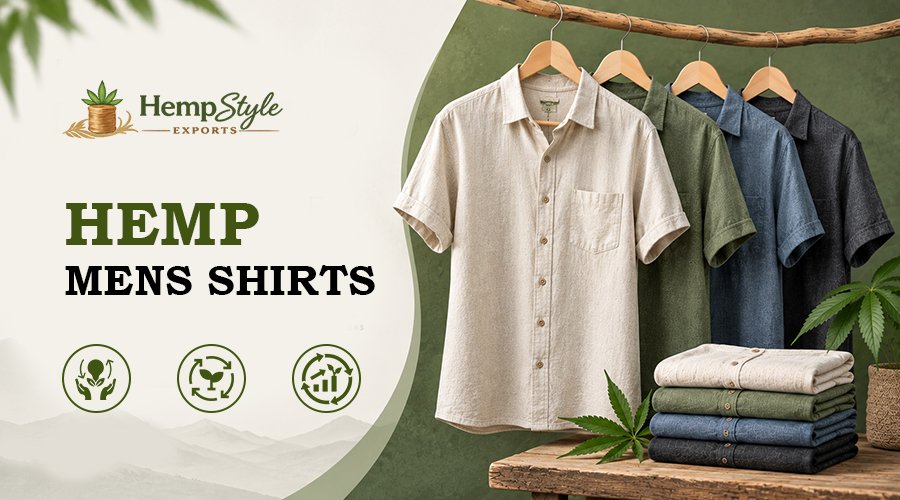
Menswear moves slowly — and that’s not a knock against it. A guy finds a shirt he actually likes, buys it again in three colours, wears it for years without thinking twice. Fit matters more than trends here. Feel matters more. Whether the thing still looks decent after eighteen months matters most of all.
Which makes it an odd fit for fast fashion, honestly, and a genuinely good one for fabric built to last. That’s the gap hemp has quietly slipped into. What used to be a coarse, slightly hippie-coded material has turned into cloth people actually want to wear — hemp men’s shirts now sit in collections right next to linen and organic cotton, and nobody treats them like the token eco piece anymore.
This guide gets into what the fabric actually does, which blends suit which shirts, how to size up a factory, where the real costs tend to land, and the mistakes that end up costing a brand an entire season — the quiet ones, mostly, that nobody notices until the damage is already done.
What Sets Hemp Mens Shirts Apart From Cotton and Linen
Worth separating fibre behaviour from marketing language, because they rarely say the same thing.
Hemp breathes. Air moves through the weave instead of sitting trapped against skin, and that’s exactly why hemp shirting handles heat better than most cotton poplin does. Anyone who’s worn a stiff cotton shirt through a humid afternoon already knows how much that difference matters.
The fibre’s naturally antibacterial too. In practice, that means shirts resisting odour build-up through a long day — without chemical finishes that wash out after twenty cycles anyway and stop doing anything at all.
Strength’s the third piece. Hemp’s one of the toughest natural fibres out there, and shirts made from it hold their shape instead of going baggy at the collar or thin at the elbows the way cotton eventually does. Cotton shirts wear out. Hemp shirts soften — not the same fate at all.
That softening bit is worth sitting with for a second. A hemp shirt straight out of the packet feels firmer than cotton, no question. But after ten or fifteen washes it’s a different fabric altogether, and by fifty washes it’s genuinely better than it was on day one. Linen does something similar, which is probably why anyone who already loves linen takes to hemp almost immediately.
Growing conditions round the picture out. Hemp needs a fraction of the water cotton does, and typically grows without much pesticide input at all. For brands whose customers actually read the label, hemp mens shirts carry a story that survives a follow-up question — not just the headline claim.
Blends That Make Hemp Work in Shirting
Pure hemp suits certain aesthetics beautifully — relaxed cuts, workwear-inspired shapes, anything meant to look lived-in from the start. It’s not the right call for every shirt, though, and blending is where most brands end up landing.
Hemp with cotton is the obvious pairing, and the most common by a wide margin. Cotton brings softness and familiarity. Hemp adds strength, breathability, and the environmental angle that cotton alone can’t claim. The ratio changes the character of the whole thing — more hemp means more texture and better longevity, more cotton means a softer initial feel and an easier sell to customers who aren’t quite ready to commit.
Hemp and bamboo produces a noticeably silkier cloth with real drape to it. Suits dressier shirts, or anything meant to feel premium against skin.
Hemp and lyocell add smoothness plus better moisture management — good for travel shirts, or warmer climates where a garment needs to handle sweat without visibly announcing it.
Hemp and khadi is an interesting one, honestly. Khadi’s hand-spun and hand-woven, and it produces a texture no power loom can fake. Blend it with hemp and you get cloth that reads as genuinely handmade — which suits brands selling craft and provenance, not technical performance.
Trio blends bring linen or cotton alongside hemp for specific weights and finishes. Hemp-cotton jersey, for instance, works for casual knit shirts and polos, not woven button-downs — different fabric, different job entirely.
A capable hemp cotton mens shirts supplier walks you through these options against your actual brief, instead of pushing whatever roll happens to be sitting in the warehouse that week. That single conversation tells you almost everything about who you’re dealing with.
Getting the GSM Right Before Briefing a Hemp Mens Shirts Manufacturer
Grams per square metre shapes a shirt more than most brands expect, and it causes more sampling headaches than the fibre choice ever does.
Lightweight cloth sits between 90 and 150 GSM — summer pieces, overshirts worn open, anything meant to move and breathe. The drape’s genuinely lovely, though construction has to be spotless here, because thin cloth shows every seam and every shortcut taken on the machine. There’s nowhere to hide.
Mediumweight covers 150 to 300 GSM, and this is where most hemp men’s shirts built for year-round wear actually land. Enough body to hold a collar up properly, still light enough to get through a warm afternoon without regret.
Heavyweight runs 300 to 450 GSM — overshirts, shackets, workwear shapes layered over a tee once autumn shows up. More cloth per garment, so naturally, the unit price climbs right along with it.
Industrial weights push past 450 GSM, which sits well outside shirting territory entirely.
Weave matters just as much as weight on woven styles. Plain weave, twill, chambray — each behaves differently even at the same GSM, changing drape, opacity, and how the cloth takes a press.
Get the number in writing, every single time. Ask any hemp mens shirts manufacturer to confirm GSM directly on the order, because “medium weight” means one thing at one mill and something else entirely at the next — and a forty-gram gap changes the whole garment.
What to Ask a Hemp Mens Shirts Manufacturer Before Committing
Price rarely breaks these relationships. Everything around price does.
Certification comes first, always. GOTS covers organic content, processing, and labour standards across the entire chain. Oeko-Tex is narrower — it confirms the finished cloth itself carries no harmful substances. A factory holding both has already been audited by people who don’t take claims at face value, which counts for a lot.
Ask directly about dyes. Eco dyes and low-impact processing are simple to promise and simple to skip quietly. Shirt colours face heavy washing, so dye quality shows up fast in customer complaints about fading.
Sampling is non-negotiable. Swatches first, then a prototype garment, then bulk. Any hemp mens shirts manufacturer unwilling to sample before a production run is telling you something you should hear.
Minimums shape the entire plan. A typical MOQ sits around 1000 units per style and per colour. That figure feels impossible to a startup and entirely routine to anyone who has cost a run properly. Learn it in week one rather than week six.
Shirt manufacturing deserves its own set of specific questions. Collar interlining. Placket finish. Button quality. Seam type. Sleeve placket construction. These are the details separating a shirt that looks expensive from one that looks cheap — and they cost almost nothing to get right, provided someone specifies them early rather than leaving it to guesswork.
Export capability matters when stock crosses borders. Documentation, compliance, freight handling. Factories regularly shipping to the USA, UK, Europe and Australia have solved problems others haven’t yet met.
Pattern and fit capability is the question brands forget. Shirt fit is harder than it looks — armhole placement, chest ease, sleeve length grading across sizes. Ask how the factory approaches it.
Why Hemp Mens Shirts Wholesale Makes Commercial Sense
The economics work differently to fast fashion, and that’s precisely the point.
Margin holds better on durable products. A shirt that survives three years justifies a higher retail price, and customers who understand why they’re paying more return to buy again. Cheap shirts compete only on price, which is a race nobody wins.
Return rates drop. Quality construction and fabric that behaves predictably means fewer complaints about shrinkage, fading and shape loss.
Ordering hemp mens shirts wholesale brings unit costs down substantially as volume rises. The gap between 1000 and 5000 units per style often reshapes a brand’s entire margin structure.
Stock ages well too. Classic menswear shapes don’t date the way trend-led womenswear does, so unsold inventory just carries into next season instead of getting dumped on the discount rail. For a small business, that matters more for cash flow than people tend to give it credit for.
Then there’s the procurement angle. Corporate uniform programmes and hospitality groups have started asking harder supply chain questions, and certified natural fibre shirting answers them in a way generic polycotton cannot.
Which Shirt Styles Suit Sustainable Hemp Mens Shirts
Not every shape works in every fabric, so worth being specific about what performs.
Casual button-downs are the natural starting point. Mediumweight hemp-cotton, plain weave, relaxed through the body — the kind of shirt that works open or buttoned. Forgiving to fit, easy to sample, hard to get badly wrong.
Short-sleeve summer shirts play to hemp’s strengths completely. Breathability and texture combine well, and camp collar shapes suit the fabric’s natural drape.
Overshirts and jackets use heavier weights and hemp’s durability properly. These get worn constantly, layered over tees, and they age visibly in a way customers actively like.
Workwear-inspired shirts suit pure hemp or high-hemp blends where texture is the point rather than something to be softened away.
Dressier shirts need finer blends — hemp with bamboo or lyocell — plus attention to collar construction and pressing. Harder to execute, but a real differentiator for brands willing to sample properly.
Building a range means several weights and blends working together, which is exactly why single-fabric suppliers become a constraint as a collection grows. Sustainable hemp mens shirts across a full range need a factory comfortable with multiple constructions.
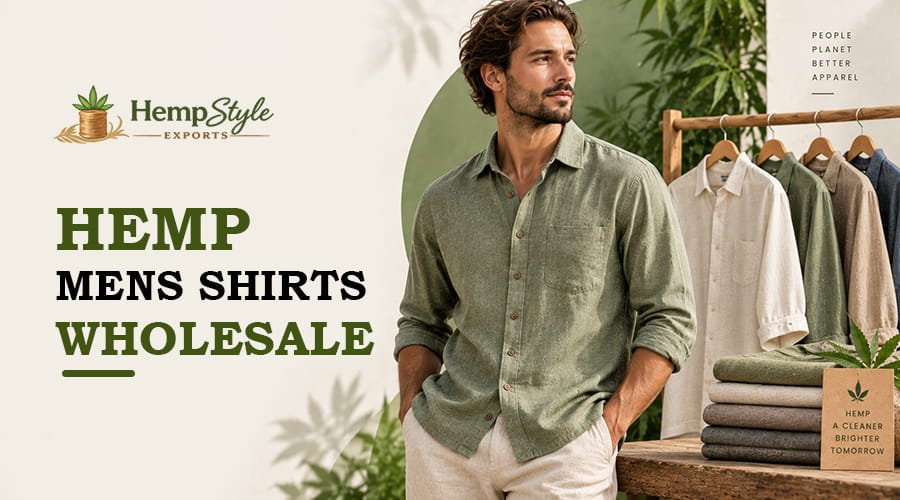
What Drives the Price of Hemp Mens Shirts Wholesale
Several things move a quote, and fibre cost is only part of it.
Composition matters first. Higher hemp content usually costs more than cotton-heavy cloth, since hemp processing is still less industrialised. Lyocell adds cost. Khadi, hand-spun and hand-woven, sits in a bracket of its own.
GSM feeds straight into price. A 380 GSM overshirt swallows far more cloth than a 130 GSM summer shirt, and the quote shows it plainly.
Construction adds up faster than most brands allow for. Chest pockets, contrast plackets, French seams, better buttons, embroidered details — each one takes machine time. Two hemp mens shirts in identical cloth can differ by several dollars purely on how they’re put together.
Volume changes everything. Pricing on hemp mens shirts wholesale orders drops noticeably as quantities climb past a few thousand per style, often enough to shift the whole margin plan.
Finishing choices matter too. Garment washing, enzyme softening, stone washing — all cost money and all change how the shirt feels hanging on a rail.
Then the extras. Custom dyeing, Pantone matching, printing, bespoke packaging, custom labelling. Sort all of it upfront instead of haggling once samples land.
Freight belongs in the sum as well. The sea is cheap and slow, the air is the opposite. Anyone launching to a fixed date should count backwards with real slack, because production runs late and shipping runs later still.
Why India Sits at the Centre of Hemp Shirting Production
The geography isn’t accidental.
Textile expertise here goes back generations, with deep knowledge of natural fibre processing that newer manufacturing regions simply haven’t accumulated. Hemp, cotton, linen, khadi — all sit within an established skill base rather than being learned from zero.
Khadi deserves separate mention. Hand-spun and hand-woven, producing texture no industrial process replicates. Blending it with hemp creates cloth available almost nowhere else.
Shirt-making tradition runs deep too. The construction skills that make a good collar and a clean placket exist in abundance, which is not true everywhere.
Cost structures stay competitive without the labour concerns attached to some sourcing regions, particularly at certified facilities working under audited ethical standards.
There’s flexibility as well. Manufacturers here will quote smaller custom runs and bespoke blend development that higher-volume regions refuse outright, which suits growing brands far better.
Private Labelling and Building a Distinct Identity
Anyone building a brand rather than reselling needs to think about this early.
Private labelling covers neck labels, care tags, hangtags, packaging and branded details. Every element has to arrive correct, since a beautifully made shirt with the wrong care label creates compliance problems in several markets.
Custom blend development is what separates a manufacturing partner from a catalogue seller. Asking for a specific hemp-cotton ratio at a particular GSM in a particular weave, and receiving a considered answer about whether it will actually work, tells you more than any brochure.
Bespoke fits matter enormously in menswear, where fit is the entire purchase decision. Developing a house block that customers recognise across seasons builds repeat business better than any marketing campaign.
Trims are worth attention too. Buttons, labels, thread colour, packaging. Small things individually, but collectively they decide whether a shirt reads as considered or generic.
Mistakes That Cost Brands a Season
Rushing sampling tops the list. Two or three rounds is normal for shirting. Brands that jump to production almost always pay for it later.
Ignoring shrinkage runs a close second. Hemp and hemp blends shrink. Wash-test every sample and build the allowance into the pattern rather than discovering the problem after two thousand units arrive.
Under-specifying collar interlining produces shirts with floppy collars that photograph badly and sell worse. Cheap to fix at sampling, expensive afterwards.
Assuming print behaves as it does on cotton causes artwork problems. Hemp texture affects fine detail reproduction, so discuss designs with the factory before finalising files.
Skipping colour continuity across a range looks amateurish on a website grid. Order matching pieces together, dye them together, and say so explicitly.
Underestimating lead times catches nearly everyone once. Sampling, revisions, approval, production, freight, customs. Each stage stretches, and they stack.
Where to Start
Fabric swatches before anything else. Handling a 180 GSM hemp-cotton plain weave next to a hemp-khadi blend settles debates that would otherwise burn three weeks of email.
Manufacturers such as Hemp Style Exports supply swatch sets and handle the process from sampling through to export-ready bulk production, working across 100% hemp, hemp-cotton, hemp-linen, bamboo, lyocell, khadi and trio blends from their facility in India.
Once cloth is settled, the sequence runs in order: GSM and weave, fit block, sampling, wash testing, approval, production, freight. Skip a stage and it returns later as a problem.
Worth the Extra Effort
It just takes more effort, plain and simple, than polycotton. You are putting real time into getting proportions and weave construction right and running more samples and taking into account actually what happens with the fabric after thirty washes rather than one, but that’s the exchange-a more durable shirt, to stand shoulder-to-shoulder and a higher number on its back, and to make a sustainability claim not really subject to caveat.
